Black Friday: 2+2 free on perfumes of 50 ml and up. Until Monday 30 November only.

What scents go well together? A pairing chart by fragrance family

6 min read
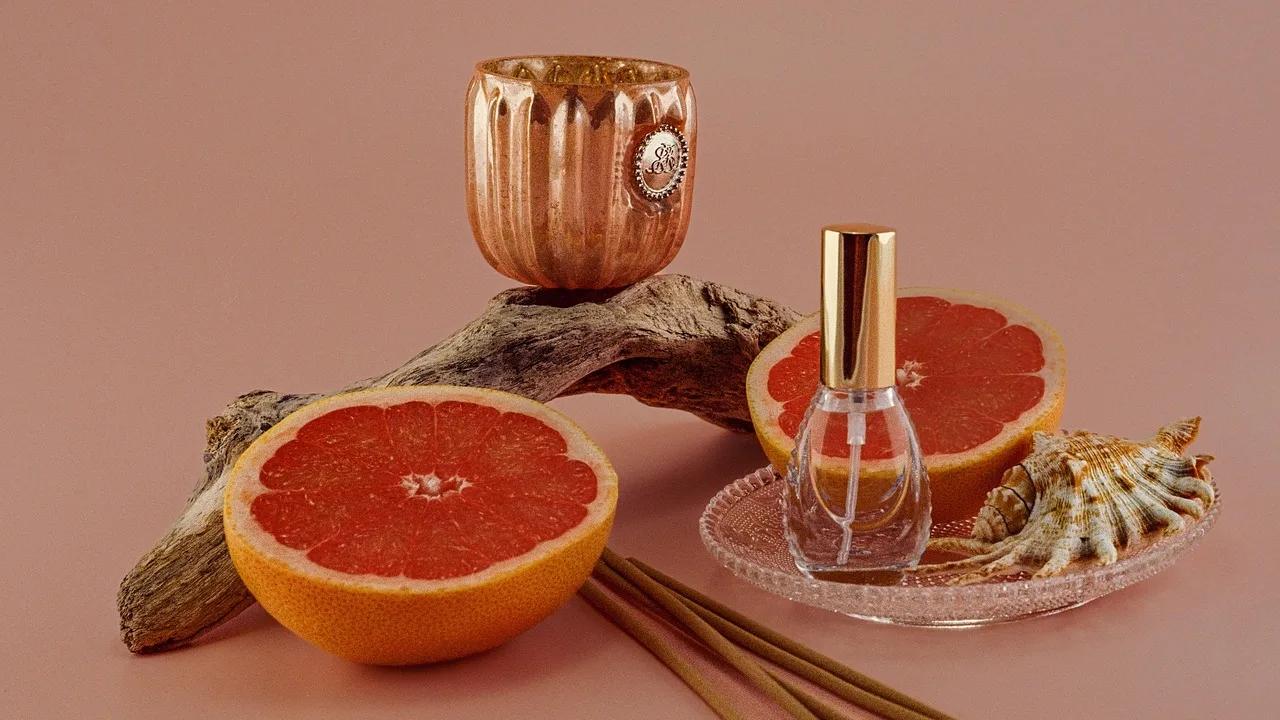
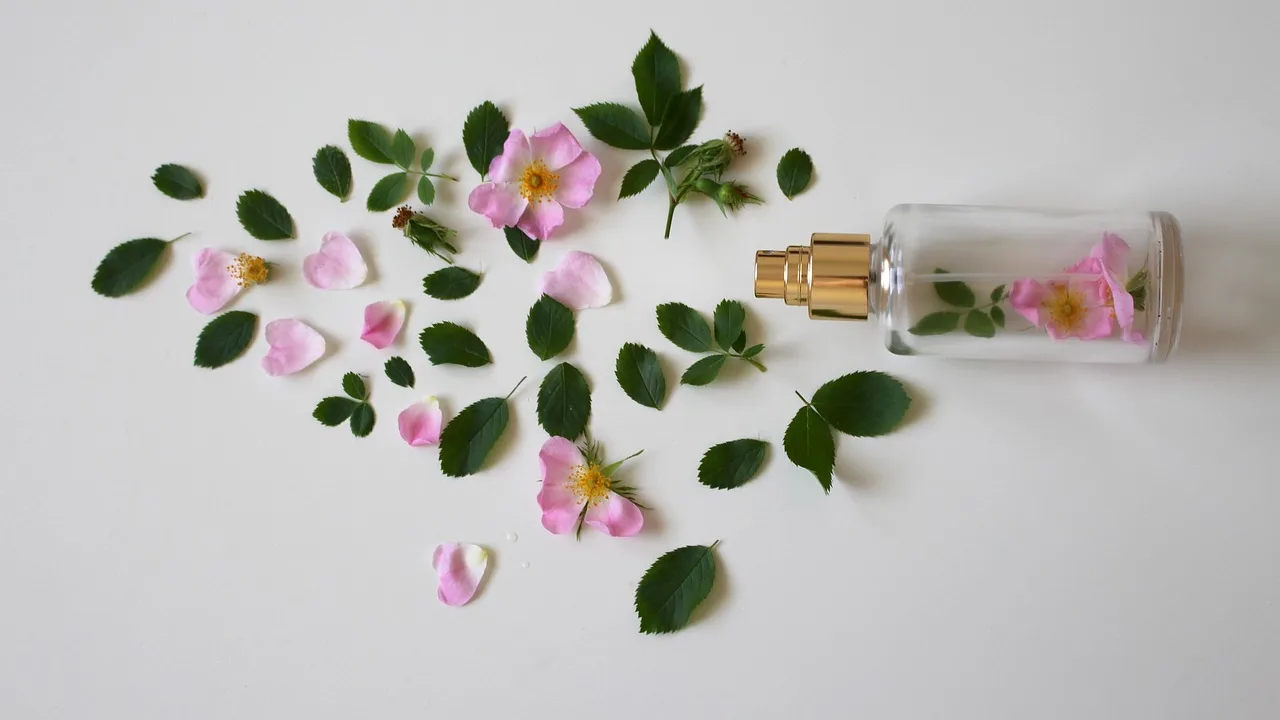
Glass perfume bottles among citrus slices, cedar wood and flowers on a light table.
Photo: mariya_m / Pixabay

In short

Scents pair best when they share a note or come from neighbouring fragrance families, or when a fresh scent lifts a deeper base. In the SENTORA configurator, Ocean Mist 30% with Cedar Forest 70%, Aqua Citrus 25% with Musk Royale 75% and Cotton Fresh 50% with Chocolate Ganache 50% all score 100 out of 100. Fresh scents usually only need a smaller share.

Scents in the configurator
157 scents in 8 fragrance families, 1 to 5 per blend
Ratios
5% steps, totalling 100%, smallest recommended share 10%
Harmony score bands
90+ excellent, 75 to 89 good, 60 to 74 interesting contrast
Example pair scoring 100
Ocean Mist 30% + Cedar Forest 70%
Example trio scoring 100
Lavender Garden 10% + Velvet Cream Peony 35% + White Peach and Freesia 55%

What scents go well together?

The scents that pair most easily are those that share at least one note or belong to neighbouring fragrance families, along with pairs where one scent brings freshness and the other brings depth. In the SENTORA configurator, marine scents reach a full harmony score of 100 out of 100 with cedar, with powdery musk or with creamy sweet notes, for example.

Three simple guidelines help you choose:

  • A shared note as a bridge. Acqua Marine and Apricot Cream Rose both contain rose, while Water Lily and Lotus and Magnolia are linked by green leaves. A shared note holds the blend together.
  • Fresh scents as an accent. Marine and citrus scents are bold, so when paired with wood, 20 to 30% is often enough.
  • Contrast in moderation. Freshness and sweetness are not mutually exclusive: Cotton Fresh and Chocolate Ganache at 50 : 50 score 100.

You will find specific pairs with their ratios in the table in the section on family combinations.

Why do neighbouring fragrance families blend well?

Neighbouring fragrance families blend well because they smell similar, so the transition between them feels seamless. This idea comes from Michael Edwards' fragrance wheel, which divides scents into main families (floral, oriental, woody, fresh) and then into subfamilies such as citrus, water, green, fruity or soft floral (overview of the fragrance wheel in PMC).

At first, the wheel was based more on experience than on experiment. A later analysis of perfume descriptions, however, showed strong agreement between the wheel and other odour maps, supporting the idea that closeness of families on the wheel reflects genuine similarity between scents (Zarzo and Stanton). Fougère sits at the centre of the wheel because it contains elements of all the other families (Moodie Davitt Report).

In practice, this means families side by side blend smoothly, while opposite families create contrast. That contrast is not a mistake; you just need to balance it with the ratio.

Which fragrance family combinations score 100?

In the configurator, the pairings scoring 100 out of 100 are mainly marine and fresh scents combined with woody, floral, musky and sweet scents. The table summarises tested pairs by family, including the ratio the configurator treats as the best.

Family combinationPairRatioHarmony
Marine and fresh + woodyOcean Mist + Cedar Forest30% : 70%100
Marine and fresh + woodyOcean Waves + Himalayan Cedar25% : 75%100
Marine and fresh + woodyFresh Linen + Vanille Santal Deluxe50% : 50%100
Marine and fresh + floralAcqua Marine + Apricot Cream Rose40% : 60%100
Marine and fresh + floralAqua Citrus + Blue Violet20% : 80%100
Marine and fresh + floralWater Lily and Lotus + Magnolia50% : 50%100
Marine and fresh + muskyAqua Citrus + Musk Royale25% : 75%100
Marine and fresh + muskyRainfall + Cotton Musk15% : 85%100
Marine and fresh + muskyOcean Waves + Baby Powder20% : 80%100
Marine and fresh + balsamic and sweetCotton Fresh + Cognac and Praline50% : 50%100
Marine and fresh + balsamic and sweetSoap Fresh + Cranberry Cheesecake50% : 50%100
Marine and fresh + spicy and orientalWhite Musk + African Tonka50% : 50%100
Marine and fresh + marine and freshSandy Beach + White Amber30% : 70%100
Floral + balsamic and sweetAlmond Blossom and Red Plum + Cognac and Praline30% : 70%100
Floral + balsamic and sweetAlmond Blossom and Red Plum + Bourbon Caramel35% : 65%100

You can open any of these pairs in the perfume configurator and fine-tune the ratio to your taste.

What goes well with fresh and marine scents?

Fresh and marine scents pair best with wood, powdery musk and creamy sweet notes, because these give them the base that freshness lacks on its own. Each direction gives a different result:

  • Wood: a clean, dry character. Ocean Breeze (lemon, bergamot, linden) with Cedar Forest or Himalayan Cedar at 25 : 75 feels like forest air after rain. Ocean Mist 25% with Oak and Hazelnut 75% adds nutty warmth.
  • Musk and powder: a soft, skin-like trail. Sea Salt and Sage 25% with Baby Powder 75%, or 20% with Cotton Musk 80%, softens the salty and herbal notes.
  • Sweet notes: a surprising contrast. Sunwashed Linen with Vanille Santal Deluxe or with Cranberry Cheesecake at 50 : 50 combines cleanliness with a dessert-like trail.
  • Florals: a fresh bouquet. Water Lily and Lotus at 50 : 50 with Black Baccara or with Fig and Jasmine.

Notice that with wood and musk, the fresh scent makes up only a fifth to a third of the blend. It is bold, and in a smaller share it will not overpower the quieter base.
How do you build a trio of scents?

The surest way to build a trio is to let one scent form a soft centre, another add character and the third come in as a small accent of around 10 to 20%. In the tested trios, Velvet Cream Peony often plays the linking role and Lavender Garden the accent.

  1. Lavender Garden 10% + Velvet Cream Peony 35% + White Peach and Freesia 55%: harmony 100
  2. Lavender Garden 20% + Velvet Cream Peony 55% + Alpine Stonewoods 25%: harmony 100
  3. Almond Blossom and Red Plum 40% + Lavender Garden 15% + Velvet Cream Peony 45%: harmony 99
  4. Lavender Garden 10% + Velvet Cream Peony 35% + Blackberry Custard 55%: harmony 98
  5. Acqua Marine 35% + Almond Blossom and Red Plum 50% + Lavender Garden 15%: harmony 97
  6. Acqua Marine 25% + Almond Blossom and Red Plum 30% + Rose Honey and Geranium 45%: harmony 96

Here, herbal lavender connects fruity, woody and sweet scents, and it only needs a small share to do so. If you want to see how a perfume is made to your own recipe, the process is described on the bespoke perfume page.

What ratio of scents should you choose?

Choose the ratio according to the strength of the scents: give a bold fresh or herbal scent the smaller share, while soft and creamy scents can take up to half the blend. A few recurring patterns emerge from the tested combinations:

  • Fresh + wood: most often 20 to 30% fresh scent and 70 to 80% wood.
  • Fresh + musk: 15 to 25% fresh scent, for example Rainfall 15% and Cotton Musk 85%.
  • Fresh + sweet or creamy: often an even 50 : 50.
  • Accent in a trio: 10 to 20%.

In the configurator, ratios are set in 5% steps and always total 100%. The ratio recommendations assume no scent falls below 10%, because a smaller share would get lost in the blend.

What does the harmony score tell you, and what does it not?

The harmony score shows how well your chosen scents blend in the configurator on a scale of 0 to 100; it is not a scientifically measured quantity. There are four bands: 90 and above means excellent harmony, 75 to 89 good harmony, 60 to 74 an interesting contrast, and lower values an experiment.

The scientific literature notes that nobody has yet found numbers or mathematical relationships for blending scents harmoniously, and that harmony is determined through experience and trial (Spence and Di Stefano, 2022). So treat the score as a guide, not a verdict. A blend scoring 70 may be exactly what you are looking for if you enjoy contrast.

Alongside the score, the configurator also suggests what to add to the blend or how to adjust the ratio.

You will find answers to practical questions about ordering in the FAQs. If you would rather start with a finished fragrance, take a look at our ready-made perfumes.

Frequently asked questions

How many scents can I blend in one perfume?

In the perfume configurator you choose 1 to 5 scents from 157. The tested combinations in this article are pairs and trios, which are easy to keep track of and to fine-tune.

How long should a blended perfume mature?

A freshly blended scent develops as it matures and its notes knit together. For the fullest result, give it up to 6 weeks.

Is a custom scent blend safe?

Every blend is checked against IFRA limits, the international safety standards for fragrance ingredients, before it is made.

Which concentration and size can I choose?

You can choose Eau de Toilette, Eau de Parfum or Parfum, in a 50 ml or 100 ml bottle. The label carries a name of your choice.

Can I use a scent combination in a candle too?

You can blend a candle in the candle configurator (/konfigurator-svicek), which offers 43 scents from eight families. The scent range differs from the perfume range.

Sources

  1. The diatonic sound of scent imagery (PMC): popis Edwardsova kola vůní a jeho empirické podpory
  2. Zarzo & Stanton: Understanding the underlying dimensions in perfumers' odor perception space (ifaroma.org)
  3. Crossmodal Harmony: Looking for the Meaning of Harmony Beyond Hearing (Spence & Di Stefano, i-Perception 2022)
  4. Michael Edwards lists over 5,700 fragrances in 24th edition of Fragrances of the World (Moodie Davitt Report)
#pairings#fragrance families#perfumes

Related articles