Which perfume suits winter?
The perfume that suits winter best is one built on base notes: woods, resins, amber, vanilla, spice, tobacco and leather. These materials are made of large, heavy molecules that evaporate slowly, so they hold up in the cold rather than vanishing after the first hour. Light citrus and marine scents, by contrast, lose their strength quickly in frosty air.
In the classification of the Société Française des Parfumeurs, three families match the winter profile most closely: woody (sandalwood, cedar, vetiver, patchouli), amber, formerly called oriental (benzoin, vanilla, balsams, labdanum), and leather. You will find an overview of the families in the Osmetheca guide. Sweet scents with caramel, chocolate or coffee are known as gourmand. This is not an official family, but it overlaps heavily with amber.
That does not mean fresh notes have to disappear in winter. They work as an accent that lightens a heavy blend. The tested ratios in the following sections show you how.
Why does perfume smell weaker in the frost?
In frosty weather, fragrance molecules are released from your skin more slowly, because their vapour pressure drops sharply as the temperature falls. According to Osmetheca, a difference of 10 °C can change the vapour pressure of a typical top note by roughly a factor of two (treat this as an approximate figure). Outdoors, then, your perfume projects less, but the molecules on your skin last longer.
Top notes are the most sensitive to temperature. Base materials react less, which is why they keep their shape in winter. According to the chapter on perfumes on NCBI Bookshelf, we perceive base notes roughly 30 minutes after application, and some can still be detected after 24 hours or more.
You will know the opposite effect too: you come in from the cold into a heated room and the scent briefly grows stronger. The accumulated molecules are released all at once in the warmth, which is known as the "bloom effect". So there is no point adding another spray just because you cannot smell your perfume outside. It will speak up once you are indoors.
Which notes come alive in the cold?
The notes that shine in the cold are those with low volatility, in other words the ones that form the heart and base of a perfume. To help you find your way, we have grouped them and listed scents from our range where you will find each type of note:
- Woods (cedar, sandalwood, guaiac, oak): Cedar Forest, Himalayan Cedar, Sandalwood, Oak and Hazelnut, Siberian Woodlands.
- Resins and balsams (frankincense, myrrh, Peru balsam): Frankincense and Myrrh, Smoked Leather and Myrrh, Balsam Wood, Palo Santo.
- Vanilla, tonka and amber: Madagascan Vanilla, African Tonka, Vanille Santal Deluxe.
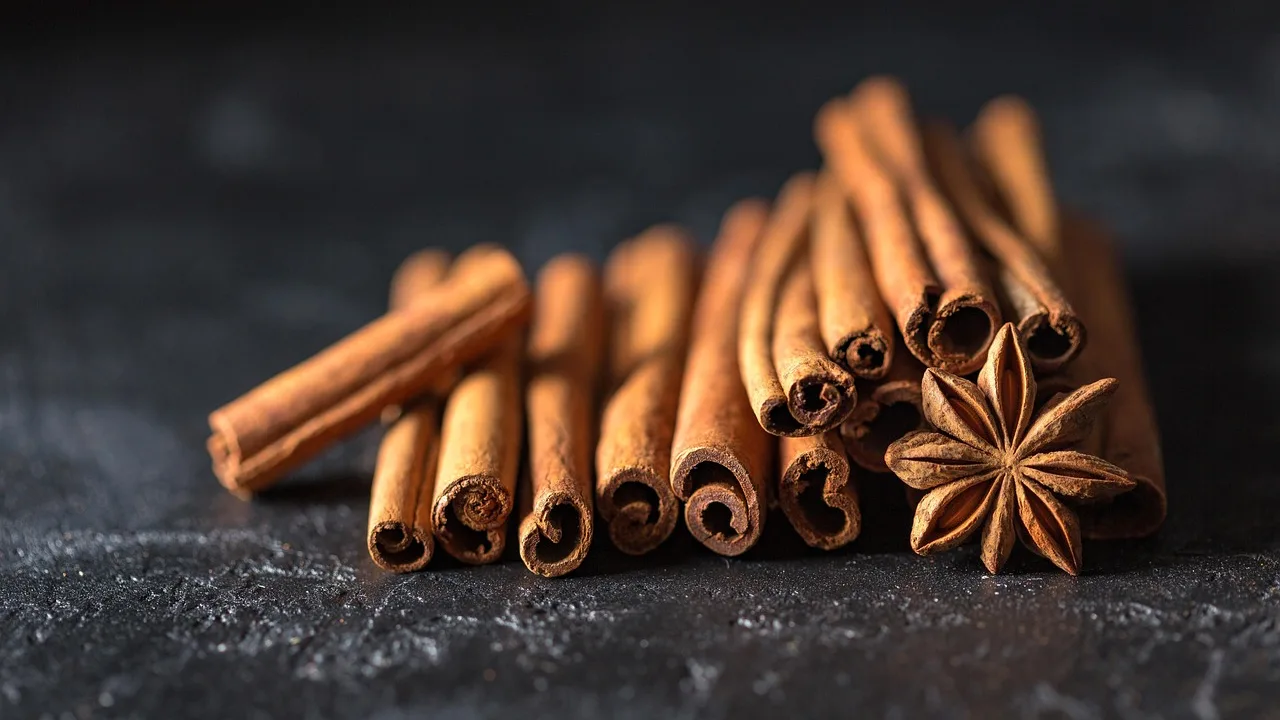
- Spices (cinnamon, clove, saffron): Cinnamon, Sweet Saffron and Cinnamon, Black Pine and Cinnamon.
- Tobacco and leather: Dark Honey and Tobacco, Leather and Tonka, New Leather Jacket, Crackling Log Fire.
- Gourmand (cognac, chestnuts, chocolate): Cognac and Praline, Roasted Chestnut and Vanilla, Chocolate Fudge.
- Conifers and forest: Juniper and Spruce, Forest Soil and Fir, Winterwood Haven.
Coniferous scents sit on the borderline: they open fresh, but thanks to fir, spruce and oakmoss they do not fade as quickly as citrus. They suit anyone who finds vanilla and caramel too sweet.
What should you pair a fresh scent with so it lasts in winter?
Pair a fresh scent with a woody or sweet base and give it the smaller share. In tested pairings from the configurator, the marine component makes up 20 to 30% and wood carries the rest. Linen and cotton scents can take up to half of the blend, provided the other half is bold.
| Blend | Ratio | Harmony | Character |
|---|---|---|---|
| Ocean Mist + Cedar Forest | 30% + 70% | 100 | conifer and cedar, cold air |
| Ocean Waves + Himalayan Cedar | 25% + 75% | 100 | lavender and mint over dry wood |
| Fresh Linen + Oak and Hazelnut | 25% + 75% | 100 | clean florals, hazelnut, oak |
| Fresh Linen + Vanille Santal Deluxe | 50% + 50% | 100 | cognac, caramel and fir with a clean veil |
| Cotton Fresh + Cognac and Praline | 50% + 50% | 100 | rosemary and bergamot against praline |
| Cotton Fresh + Chocolate Ganache | 50% + 50% | 100 | cocoa lightened with bamboo and lemon |
| White Musk + African Tonka | 50% + 50% | 100 | soft, powdery tonka |
| White Musk + Chocolate Fudge | 40% + 60% | 100 | coffee, nuts, chocolate |
| Almond Blossom and Red Plum + Cognac and Praline | 30% + 70% | 100 | plum, fig and cognac |
| Almond Blossom and Red Plum + Bourbon Caramel | 35% + 65% | 100 | sweet, fruity, caramel |
Notice that the lighter the fresh component, the smaller its share. In a winter blend, a marine scent adds air at the opening, and the wood then holds the fragrance all day.
Which trios work for a winter blend?
For a winter trio, a reliable formula is to combine a light note, a creamy or fruity floral and a woody base. These tested trios score a harmony of 94 to 100:
- Lavender Garden 20% + Velvet Cream Peony 55% + Alpine Stonewoods 25%: harmony 100. Lavender and rosemary, with caramel, milk and black pepper beneath.
- Almond Blossom and Red Plum 40% + Lavender Garden 15% + Velvet Cream Peony 45%: harmony 99. Tonka, fig and plum with a herbal trace.
- Acqua Marine 25% + Almond Blossom and Red Plum 30% + Rose Honey and Geranium 45%: harmony 96. Rosy and honeyed, with a marine touch.
- Acqua Marine 15% + Almond Blossom and Red Plum 60% + Alpine Stonewoods 25%: harmony 94. Fruity plum and eucalyptus with a stony chill.
When you fine-tune your own blend in the perfume configurator, you can choose 1 to 5 scents from 157 and adjust the ratios in steps of 5%. The recommendation assumes a minimum share of 10% per scent. A score of 90 or more means excellent harmony, 75 to 89 good, 60 to 74 an interesting contrast, and anything lower is an experiment.
How should you apply perfume in winter so it lasts?
In winter, apply perfume to moisturised skin, because dry skin holds fragrance less well. A review from Amsterdam UMC states that just 15 minutes of cold, dry air significantly reduces skin hydration. A study in the Journal of Cosmetic Science notes that skin contains about 40% fewer ceramides in winter than in summer. The link to fragrance longevity is drawn from practice rather than measured directly.
- Before your perfume, use an unscented cream so the two do not clash.
- Choose a higher concentration: Eau de Parfum or Parfum contains more fragrance material than Eau de Toilette.
- Apply to spots that stay warm under your clothes, such as your chest or your wrists under a sleeve.
- Expect the scent to bloom briefly in the warmth. Two or three sprays are usually enough.